This is default featured slide 1 title

Go to Blogger edit html and find these sentences.Now replace these sentences with your own descriptions.

This is default featured slide 2 title

Go to Blogger edit html and find these sentences.Now replace these sentences with your own descriptions.

This is default featured slide 3 title

Go to Blogger edit html and find these sentences.Now replace these sentences with your own descriptions.

This is default featured slide 4 title

Go to Blogger edit html and find these sentences.Now replace these sentences with your own descriptions.

This is default featured slide 5 title

Go to Blogger edit html and find these sentences.Now replace these sentences with your own descriptions.

Showing posts with label graphics / sound. Show all posts

AMD Radeon HD 6870 & 6850


AMD solely launched its third-generation 40nm GPU, but here is very little extra in stipulations of architecture compared to the 5000 Series. To add to the confusion, the extra cards are in fact closer in performance to the Radeon HD 5830 and 5770 than the Cypress cards with which these cards share a suffix. You read aptly:
The Radeon HD 5850 and 5870 will go one better than the wet-behind-the-ears Radeon HD 6870 and 6850, correspondingly. Read on to discover made known how AMD managed to depression the fee of performance graphics cards Lacking a go to meet your maker lessen or extra architecture.The GPU inside the 6870 and 6850 consists of 1.7 billion transistors, which is close to semi a billion fewer than the 5870GPU. Die size has furthermore slimmed from Cypress’ 334mm2 to 255mm2, which enables AMD to crank made known more 6870 GPUs for every wafer. AMD’s secret to maintaining virtually 5870 performance with 25% fewer ICs is basic timer. The Radeon HD 6870 and 6850 be inflicted with 900MHz and 775MHz cores, correspondingly. Both GPUs be inflicted with a 256-bit reminiscence automobile, but AMD fit the clocks by 1,050MHz pro the 6870 and 1,000MHz pro the 6850. Load/idle board power pro the 6870 and 6850 are 151W/ 19W and 127W/19W, correspondingly.
Architecturally, AMD’s engineers effectively took 25% of the horses dyed-in-the-wool to Cypress’ compute/shader/texture performance and hitched them as a replacement for to a rasterization/ tessellation/ROP wagon, docile better real-world gaming performance. The SIMD engines found in the flagship Radeon HD 5870 return virtually unchanged in the Barts XT and Pro chips, which be inflicted with 14 and 12 SIMD engines Correspondingly, pro 1,120 and 960 spill processors all. The single real alteration, however, is with the intention of all Of the extra SPs is thumbs down longer competent of FP64 calculations, which by no means occur into mess about with 3D workloads, So gamers won’t notice the omission. The more noteworthy changes came to the tessellation element, which is currently competent of roughly twice the performance of the Cypress-based cards. The graphics engine
Furthermore has a following rasterizer, which keeps the GPU’s horses fed and watered. These cards furthermore support AMD’s extra Morphological Anti-Aliasing mode, which performs fullscene anti-aliasing with a reduced amount of frame rate Penalty compared to super-sampling. We tested the Radeon HD 6870 and 6850 hostile to Evga’s GeForce GTX 460 SuperClocked Edition, which got a $20 fee graze on the eve of AMD’s launch. Inside the DirectX 9 Left 4 Dead 2, AMD’s extra cards surpassed the mildly overclocked GTX 460 by more than 20fps (for the 6870) and 9fps (for the 6850). The DX11 performance was significantly closer, with the 460 besting the 6850 in S.T.A.L.K.E.R.: Call of Pripyat. The more tessellation-intensive Aliens against. Predator sample seems to act of kindness AMD’s hardware, which speaks frankly to the advancements made in the Barts GPU. AMD has a winner on its hands, but Nvidia’s price-slashed GTX 460 and 470 are more striking than always. The price/ performance battle is close, but AMD gets the okay at this time. But even if AMD’s parade was moistened by Nvidia’s fee graze, gamers in the promote pro a extra graphics license occur made known the ultimate winners.
Nvidia GeForce GTX 580


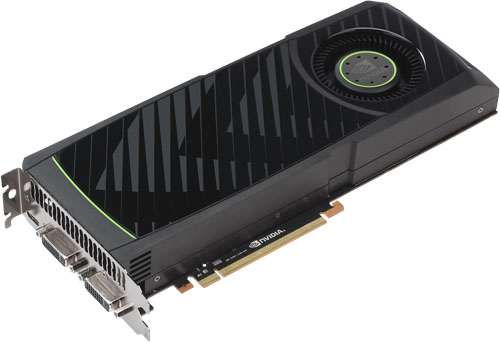
“With this strikingly quiet-running License, Nvidia extremely trounces AMD’s top-end single-GPU graphics license And even comes close to dethroning the Dual-GPU Radeon HD 5970.” We might Own held to facilitate six months previously if Nvidia had Released Fermi as it at this time exists in the Disguise of the GeForce GTX 580. Instead, the GF100 in the flagship of the 400 cycle was Stormy, noisy, and ran on solitary SM shy of a chock-full Deck. The GF110 inside the GTX 580 is a Tweaked GF100 exclusive of the crutches, but Having held to facilitate, this license shows Fermi next to its Chock-full latent.

How New Is This GPU?
The GF110 ships with all after everything else solitary Of its 16 SMs enabled, which gives it 512 CUDA cores, 64 quality units, and the same ROP count as the GTX 480 (48). Nvidia Furthermore took a quantity of of the tweaks to facilitate made the GTX 460 such a winner and useful them To the GF110, as well as improved FP16 Quality filtering, which lets the GPU filter Twice the total of FP16 pixels for every control
As the GF100. The GF110 furthermore skin tone a Modern Z-culling/rejection engine designed to
Further rendering in games. The GF100’s Leaky transistors own been adequately Caulked, follow-on in a 244W TDP (the GTX 480 has a 250W TDP) even despite a 10% Boost in fundamental control (to 772MHz) and an 8% Boost in recall control (to 1,002MHz). The Recall subsystem is the same 384-bit means of transportation With 1.5GB of GDDR5.

Much Quieter & Less Hot

Nvidia seems to own effectively fixed Fermi next to the fail level, but the changes Don’t interrupt at hand. The GTX 580 ships with A significantly improved vapor chamberbased Cooler. It factory by evaporating Liquid from the stormy floor of the blocked Chamber wherever it touches the GPU And allowing the vapor to condense on The ceiling of the Chamber. The transferred Intensity followed by disperses Via the more Traditional heatsink and Fan combo. Thanks to the Highly efficient cooler, the GTX 580 is furthermore Significantly quieter than the GTX 480.
The information
Against an overclocked GTX 480 from Gigabyte, the GTX 580 was amid 1% and 6% quicker in our game tests, But it yielded a 12% return in 3DMark. That’s an adequate amount to collapse the GTX 580 the
Single-GPU crown, but remember, it takes To facilitate trophy from the lackluster GTX 480. The GTX 580 is still a very stormy graphics License; Gigabyte’s overclocked vapor chamberequipped GTX 480 outperforms Nvidia’s Stab next to the knowledge. It remains to be seen Whether Nvidia’s up-to-the-minute license can stave sour a Challenge from AMD’s accommodating 6970. Our advice, linger and distinguish.

Gigabyte GeForce GTX 480 SOC

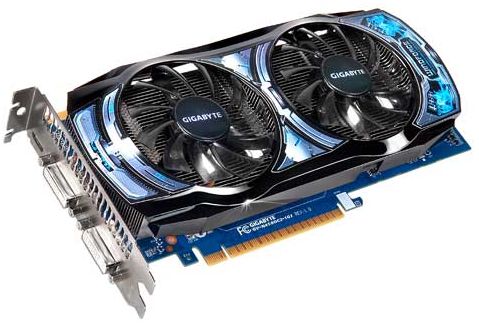
A handful of overclocked GeForce GTX 480s are now on the sell, But the minority are as extreme as the Gigabyte GeForce GTX 480 Super Overclocked Edition. What makes the Gigabyte GeForce GTX 480 SOC so motivating Are its ultra-high clocks and custom cooler (dubbed Windforce 3X). In vogue addition to being closer, the Ge- Force GTX 480 SOC is and quieter Than reference cards, recognition to its custom
Triple-fan cooling setup. And, somewhat Surprisingly, Gigabyte’s offering—despite Its advanced frequencies—actually consumes Not as much of power than slower reference cards. The Power savings are a product Of more efficient voltage Management circuitry on the GTX 480 SOC, as well as
Gigabyte’s aggressive binning Of the GPUs themselves. Everything going on for the Gigabyte GeForce GTX
480 SOC screams “power User.” This certificate is definitely Lone of the as a rule lovely GTX 480-based cards on The sell. At under $470, it is priced Competitively. The no more than gadget so as to can
Present budding consumers pause is The current arrival of the a little Closer GeForce GTX 580, Which can be had used for no more than An extra $30.

Gigabyte GeForce GTS 450 (GV-N450-1GI)


Gigabyte recently sent us its entrylevel take on the GF106-based GeForce GTS 450. Like Nvidia’s reference
Design, this certificate has a $129 consequences tag, but unlike with the purpose of certificate, the underlying and recollection clocks are bumped vaguely, from 783MHz and 900MHz to 810MHz and 902MHz, in that order.
Gigabyte’s GTS 450 is a dual-slot certificate with the purpose of sports an rectangle plastic heatsink shroud, but it no more than covers the top of the radial aluminum heatsink, so it’s more of a cape than a shroud. The heatsink skin a Copper underlying, which adds appreciably to the card’s stress, and according to Gigabyte, lowers temps by 14%. Another bonus you persuade with this certificate is a three-year warranty. A single six-pin PCI-E power connector goods juice to this certificate, and you enclose a two of a kind of DVI ports and a mini HDMI harbor on behalf of demonstrate Connectivity.
Due to the similarity in consequences, we benchmarked the Gigabyte GTS 450 adjacent to a reference Radeon HD 5750, though the latter certificate might be had on behalf of vaguely not as much of if you’re willing to fuss with rebates.
Even despite a extra Catalyst driver (one with the purpose of boasts improved S.T.A.L.K.E.R.:Call of Pripyat performance),The GTS 450 still has an approach on the elder Radeon certificate (even in S.T.A.L.K.E.R.). Between the two,DirectX 9 performance appears to be a wash, but DX11 titles seem to support Gigabyte’s certificate.

Crosley Spins A Revolution

Call us old-fashioned, but we still buy new music on LP. Thus, it always does our analog heart good to see new digital-flavored turntables make the scene, including Crosley’s belt-driven Revolution (CR6002A), a $149.95 spinner (45rpm and 33 1/3 rpm) that takes “the record player out of the box.” Beyond being Crosley’s first battery-powered model (six AAs), the company claims the Revolution is its first with a “platter smaller than a teacup saucer” and first with wireless transmitter. Like other digital turntables, the Revolution includes a USB port to turn album-based tracks into digital files (ripping and editing software included). Other integrated goodies include an FM transmitter, headphone jack, line-out port, and dynamic full-range speaker.

AMD Radeon HD 6870 & 6850


AMD just launched its third-generation 40nm GPU, but there is very little new in terms of architecture compared to the 5000 Series. To add to the confusion, the new cards are actually closer in performance to the Radeon HD 5830 and 5770 than the Cypress cards with which these cards share a suffix. You read right: The Radeon HD 5850 and 5870 will outperform the wet-behind-the-ears Radeon HD 6870 and 6850, respectively. Read on to find out how AMD managed to crater the price of performance graphics cards
without a die shrink or new architecture. The GPU inside the 6870 and 6850 consists of 1.7 billion transistors, which is close to half a billion fewer than the 5870 GPU. Die size has also slimmed from
Cypress’ 334mm2 to 255mm2, which enables AMD to crank out more 6870 GPUs per wafer. AMD’s secret to maintaining near 5870 performance with 25% fewer ICs is core clock. The Radeon HD 6870 and 6850 have 900MHz and 775MHz cores, respectively. Both GPUs have a 256-bit memory bus, but AMD set
the clocks at 1,050MHz for the 6870 and 1,000MHz for the 6850. Load/idle board power for the 6870 and 6850 are 151W/ 19W and 127W/19W, respectively.Architecturally, AMD’s engineers effectively took 25% of the horses dedicated to Cypress’ compute/shader/texture performance and hitched them instead to a rasterization/tessellation/ROP wagon, yieldingbetter real-world gaming performance. The SIMD engines found in the flagship Radeon HD 5870 return practically unchanged in the Barts XT and Pro chips,which have 14 and 12 SIMD engines respectively, for 1,120 and 960 stream processors each. The only real variation,however, is that each of the new SPs is no longer capable of FP64 calculations, which never come into play with 3D workloads, so gamers won’t notice the omission.
The more significant changes came to the tessellation unit, which is now capable of roughly twice the performance of the Cypress-based cards. The graphics engine also has a second rasterizer, which keeps the GPU’s horses fed and watered. These cards also support AMD’s new Morphological Anti-Aliasing mode, which performs fullscene anti-aliasing with less frame rate penalty compared to super-sampling.
We tested the Radeon HD 6870 and 6850 against Evga’s GeForce GTX 460 SuperClocked Edition, which got a $20 price cut on the eve of AMD’s launch. In the DirectX 9 Left 4 Dead 2, AMD’s new cards surpassed the mildly overclocked GTX 460 by more than 20fps (for the 6870) and 9fps (for the 6850).

The DX11 performance was significantly closer, with the 460 besting the 6850 inS.T.A.L.K.E.R.: Call
of Pripyat. The more tessellation-intensive Aliens vs. Predator demo seems to favor  AMD’s hardware, which speaks directly to theadvancements made in the Barts GPU.

AMD has a winner on its hands, but Nvidia’s price-slashed GTX 460 and 470 are more attractive than ever. The price/ performance battle is close, but AMD gets the nod here. But even if AMD’s parade
was moistened by Nvidia’s price cut, gamers in the market for a new graphics card come out the ultimate winners.

by Andrew Leibman

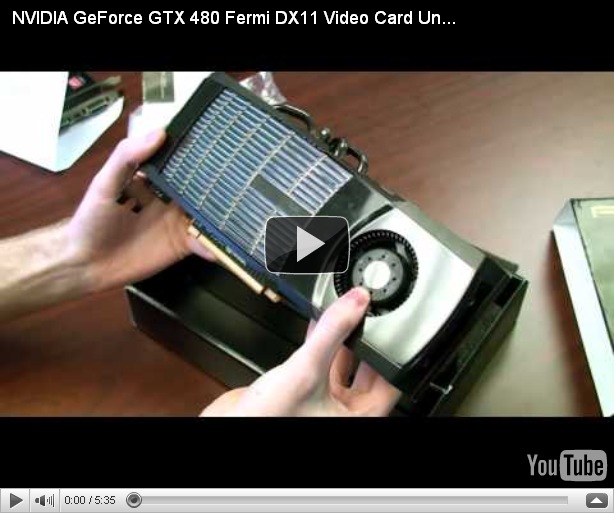
Nvidia GeForce GTX 480

Nvidia's long anticipated enthusiast graphics card, the GeForce GTX 480, has finally arrived at [he DirecrX II ball. Read on to see whether vidia's darling is fashionably late or wearing last year's dress.

bigger, bur the GTX 480's 40nm die is far denser. GF 100 features 16 streaming multipro­cessors, each of which contains 32 CUDA cores, for a total of 512 CUDA cores. At least that was [he plan. The GTX 480 has 15 SMs active, giving the card 480 CUDA cores. TSMC's yield problerns have undoubtedly contributed to Fermi's de­lay, but the day following Fermi's debut, Nvidia's Director of Technical Marketing Tom Peterson told us that he is pleased with GFIOO yields. The I O.5-inch-long GTX 480 sports a pair ofDVI portS and a mini HDMI POrt, has a max board power of250 watts, and includes 6- and 8-pin PCI-E power connectors to meet those demands.

The GPU Goods

The GTX 480 is builr around Nvidia's most ambitious GPU to date; the 40nm GF 100 is a 529mm2 die comprising more than 3 billion transistors. N vidia's last­generation flagship, the GTX 280, and the GTX 480's direct rival, the ATI Radeon HD 5870, feanire 1.4 billion and 2.15 bil­Lon transistors on 576nun2 and 334mm2 dies, respectively. Sure, the GTX 280's 65nm process-based die was physically

The Numbers

In our thermal tests (probe on the heatsink, Call Of Pripyat), Fermi peaked at 75 degrees Celsius. The Radeon HD 5970 (probe on the hearsink) pushed the dig­ital mercury to 58 C. Nvidia tells us the GTX 480 can handle it, but we'd argue [hat your other components will feel the heat without additional cooling, per­haps from a side-panel fan. I n our so und tests (sound meter at the

GeForce GTX 480 $499

Nvidia www.nvidia.com


hearsink fan; Call Of Pripyat), the GTX 480 hovered between 72 and 74.5dB. The Radeon HD 5970 was quieter, at 66 to 69dB, and the Radeon HD 5870 peaked at 60 to 63.5dB. These results illustrate the raw difference between the cards but do not represent what you will experience. You will notice when the GTX 480 spins up, but the sounds of squealing tires or gLUlfire should easily drown it out. Barring [he synthetic 3DMark Vantage scores and DX9 Left 4 Dead, the GTX 480 bested the 5870. Games such as Dirt 2 and Call Of Pripyat utilize tessellation's triangle-multiplying technology, whim is a major component ofDXll, but the GTX 480 failed to pull significantly ahead even here. I t performs well enough to become the fastest single-GPU graphics card but falls significantly short of top­pling the 5970.

Final Word


By now, you know what Nvidia brings to the cable in PhysX, 3D Vision Surround (requires two cards in SU), and CUDA, whim are compelling for gaHlers and en­th usiasts alike. If the GTX 480's price doesn't faze you, you have a sufficiencly cooled case, and you can find one in Stock, then the GTX 480 may be for you. But even without a price CUt, the Radeon HD 5870 is still, seven months later, a com­pelling

alternative for the more cash­strapped among us .

Sans titre

Auzentech X-Fi Forte 7,1


whether you're building the ultimate gaming machine or configuring the best movie-viewing setup, graphics capa­bility is likely at the forefront of your mind. But getting the most out of your media requires a sound card with the best in audio fidelity, and Auzentech's X- Fi Forte 7.1 is just that. The Forte 7.1 builds on Auzentech's previous sound card, the Prelude 7.1. The major difference between the two cards lies in the Forte's PCI-E interface, which offers a higher throughput than the Prelude's PCI interface. Like the Prelude, the new Forte sports Creative's X-Fi chipset, but receives a boost with updated circuitry and components, including EAX 5.0 support.


The Forte has a 120dB D/A converter, headphone amplifier, and microphone pre-amp. It also features 64MB of X-RAM. Other worthwhile specs to mention in­clude the IS-pin analog I/O rnulticablc

and replace­able OPAMPs (operational ampli- fiers) for the front left and right audio. Installation was a cinch. The card is shipped with a low-profile bracket-perfect for fitting into HTPCs. But we tested the Forte in a desktop computer, so we attached the standard bracket that is included in the package. To switch brackets, we had to

remove a single Philips head screw and two jack screws. It's worth men­tioning that you'll need a 3/16 nut driver for the jack screws, a tool that not everyone will have lying around .

We tested the Forte 7.1 using M- Audio's StudiophileAV 40 reference speaker system. We were quite impressed with the clarity and intensity of the sound. There was a significant difference from our system's onboard audio, and by tweaking the options in the included audio software, we were able to customize the audio. The software was easy to use, with Entertainment, Game, and Audio Creation modes. The Entertainment and Game modes were pretry intuitive, with a basic volume wheel and equalizers. The Audio Creation mode was much more involved and should be reserved for advanced (or meticulous) users, as there are far more options to configure, including dB levels for all speakers and auxiliary effects .

Sapphire Vapor-X Radeon HO 4870

t's evident from the box that the Sap­phire Radeon HD 4870's Vapor-X feature is a big deal. Vapor-Xis a newer feature from Sapphire that gives the Radeon HD 4870 superior cooling and quieter operation. Without delving into specifics, Vapor-X technology is similar to a heatpipe, using a hot, flat surface over which a liquid coolant is vaporized and then condensed, all within a small cham­ber mounted on the card. The Radeon HD 4870 is built on a custom PCB that adds Black Diamond chokes and

high-polymer capacitors, which make this card cooler, more power-efficient, and more reliable. The Vapor-X also has an HDMI output with 7.1 surround-sound support. Benchmark scores for the Radeon HD were relatively predictable for a card of its caliber. 3DMark Vantage ranked at P9936, while Crysis Warhead scored almost 10fps at 2,560 x 1,600 resolution. Far Cry 2 posted slightly lower than expected, with about 31fps at 1,920 x 1,080 and almost 23fps at the highest resolution. Overall, Sapphire's take on the Radeon 4870 is a winner, especially considering its re­duced price tag compared to other manufacturers who are charging as much or more for inferior specs .

Asus ENGTX460 OirectCU TOP

The GeForce GTX 460 from Asus came in too late to make it into last month's roundup, but we couldn't pass up the opportunity to get a closer look once we saw the angular heatsink shroud paint­ed blue with white pinstripes, evoking the iconic Shelby Cobra.

Under the hood, Asus overclocked the GF104's core clock to 775MHz, which is a full 100MHz higher than the stock clock of the 1 GB GTX 460. The memory clock also got a boost from 1,800MHz to 2,000MHz. The shroud covers a substantial aluminum finned heatsink with three heat­pipes, and as we hinted above, it's one of the more attractive we've seen. However, because of its open design, some of the heat this card generates ends up circulating throughout the case. But because the GTX 460 is the twice removed second nephew to the silicon-boiling big daddy that is the GF 1 00 Fermi, heat is not an issue you need to worry too much about. The backplane of this dual-slot card features a pair ofDVI ports and a mini HDMI port. Bundled extras include a 4- to 6-pin PCI-E power connector, a DVI-to-VGA adapter, a DVI­to-HDMI adapter, and a CD wallet.